






 AI Development
 Agentic AI Development
 AI-Product-Engineering
 Generative AI Development
 AI Chatbot Development
 RAG Development
 AI MCP Development
 n8n Automation Development
 AI Consulting
Piccosoft

Picco Labs
Picco AI
Piccosoft

Visual Inspection & Quality Automation
Automate Quality Inspection with AI-Powered Vision
Detect defects, identify inconsistencies, inspect products, and automate visual quality checks with intelligent computer vision systems.

Implement AI Where It Creates Real Business Value
Why Businesses Struggle to Implement AI
From Business Requirements to AI Implementation
What We Deliver
Where Can Your Business Implement AI?
Technologies That Power Our AI Solutions
Connect AI with Your Existing Business Ecosystem
Why Businesses Choose Piccosoft
Build a More Intelligent and Efficient Business
Frequently Asked Questions
Overview
Quality inspection plays a critical role in manufacturing, production, packaging, assembly, and industrial operations. However, traditional inspection processes often depend on manual observation, predefined checklists, and human judgment, making it difficult to maintain consistency across high-volume operations.
Identify AI Opportunities
Discover where AI can create meaningful improvements across your business. Prioritize use cases based on business value, feasibility, and expected impact.
Automate Business Processes
Reduce repetitive manual work through intelligent workflow automation. Help teams focus on higher-value activities and operational responsibilities.
Integrate AI with Existing Systems
Connect AI capabilities with applications, APIs, and databases. Enable intelligent workflows without replacing your entire technology environment.
Improve Knowledge Access
Make business information easier to search, understand, and use. Connect AI with documents, databases, and internal knowledge sources.
Build AI Applications
Develop custom AI applications, assistants, and intelligent business solutions. Design experiences around specific users, processes, and organizational requirements.
Create an AI Roadmap
Plan AI adoption through practical and achievable implementation stages. Start with focused use cases and expand capabilities as your business grows.
Quality Issues That Impact Productivity and Business Performance
Businesses often encounter challenges when quality inspection is performed manually or through limited automation systems.

Manual Inspection Dependency
Quality teams spend significant time visually checking products, components, and production outputs.
Read more

Inconsistent Inspection Results
Inspection accuracy may vary based on operator experience, fatigue, lighting conditions, and inspection complexity.
Read moreMissed Defects
Small defects, subtle variations, and hidden inconsistencies can be difficult to identify consistently.
Read moreHigh Production Volumes
Manual inspection becomes difficult to scale as production volumes and inspection frequency increase.
Read moreSlow Inspection Cycles
Traditional inspection processes can affect production speed and throughput.
Read moreQuality Data Limitations
Businesses may lack structured data about defect types, frequencies, patterns, and quality trends.
Read moreBuilding AI Inspection Systems Around Your Quality Standards
We follow a structured approach to transform business requirements into working AI solutions. Each stage focuses on business value, technical feasibility, and continuous improvement.
Inspection Requirement Analysis
Understand your products, inspection stages, quality standards, defect categories, tolerance requirements, and operational constraints.
Image & Video Acquisition
Capture product images, production line video, camera feeds, and visual data from inspection environments.
Image Preprocessing
Prepare visual inputs using image enhancement, normalization, cropping, alignment, and preprocessing techniques to improve inspection consistency.
Visual Feature Analysis
Analyze relevant product features, shapes, patterns, surfaces, dimensions, markings, colors, and visual characteristics.
Defect & Anomaly Detection
Identify visible defects, irregularities, deviations, missing components, surface issues, and other defined quality conditions.
AI-Based Inspection
Apply computer vision and AI models to classify products, detect defects, compare visual characteristics, and identify quality deviations.
Intelligent Inspection for Products, Components, and Processes
We deliver AI capabilities designed around business requirements and existing technology environments. Our services cover strategy, development, integration, automation, and deployment.
Automated Defect Detection
Identify visible defects, imperfections, irregularities, and quality issues using AI-based image analysis.
Surface Inspection
Inspect surfaces for scratches, dents, discoloration, cracks, blemishes, contamination, and other visible anomalies.
Product Quality Classification
Classify products into quality categories based on visual characteristics, inspection criteria, and defined conditions.
Component Presence Verification
Check whether required components, parts, features, labels, or elements are present in the expected locations.
Assembly Inspection
Verify supported assembly configurations, component positioning, alignment, and visible assembly conditions.
Shape & Pattern Inspection
Analyze product shapes, patterns, geometry, and visual consistency based on application requirements.
Color & Appearance Inspection
Identify color variations, appearance differences, visual mismatches, and other specified characteristics.
Dimension & Alignment Analysis
Support image-based dimensional analysis, positioning checks, alignment verification, and measurement workflows where appropriate.
AI Quality Inspection Across Industries
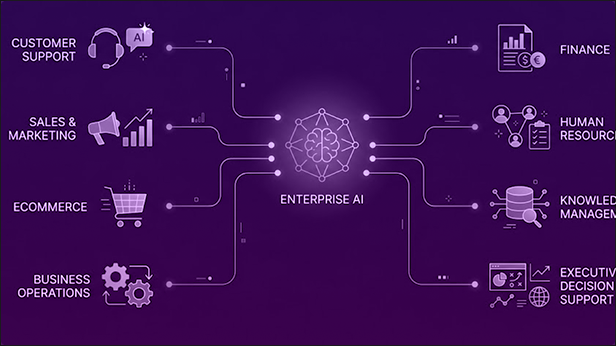
AI can be implemented across departments, processes, and business functions. We develop solutions based on your operational requirements and business priorities.
1. Manufacturing Quality Control
Detect product defects, surface irregularities, component issues, and quality variations across production environments.
2. Electronics Inspection
Inspect electronic components, circuit boards, connectors, assemblies, and visible component placement.
3. Automotive Quality Inspection
Identify visible defects, assembly inconsistencies, component variations, and surface issues in automotive parts and products.
4. Packaging & Label Inspection
Verify packaging appearance, label placement, printed information, packaging integrity, and product presentation.
5. Food & Beverage Inspection
Inspect products for visible variations, packaging defects, contamination indicators, appearance inconsistencies, and defined quality conditions.
6. Pharmaceutical & Medical Product Inspection
Support visual inspection of packaging, labels, product presentation, and specified manufacturing quality conditions.
Technology & Integration
Organize and connect business knowledge through AI-powered systems. Help employees discover information and access organizational knowledge.
Infrastructure
Connect Visual Quality Intelligence with Production Systems
AI delivers greater value when it works with existing business systems and workflows. We integrate intelligent capabilities across applications, platforms, data sources, and communication tools.
Manufacturing execution systems (MES)
Connect AI with CRM platforms and customer data. Support intelligent lead management, customer insights, and sales workflows.
Quality management systems (QMS)
Integrate AI with ERP systems and business processes. Enable intelligent access to operational, financial, and organizational information.
ERP platforms
Connect AI with ecommerce platforms, product catalogs, and order systems. Support intelligent shopping experiences, automation, and commerce operations.
Production line systems
Connect AI applications with structured business databases and data sources. Enable intelligent querying, retrieval, and data-driven workflows.
Industrial IoT platforms
Integrate AI with documents, knowledge repositories, and internal information. Enable intelligent search, document understanding, and knowledge retrieval.
Machine and sensor systems
Connect AI applications with APIs, tools, and business capabilities. Enable controlled access to services and workflows through APIs and MCP.
Warehouse management systems
Integrate AI with communication and collaboration platforms. Support automated responses, employee assistance, and conversational workflows.
Product tracking applications
Connect AI with existing automation tools and business processes. Enable intelligent task execution, routing, and workflow coordination.
Inspection dashboards
Connect AI implementations to usage tracking, performance monitoring, and outcome analytics.
Alert and notification platforms
Integrate AI systems with organizational security controls, data protection policies, and relevant regulatory requirements.
AI Engineering for Practical Quality Automation
Piccosoft combines business understanding, software engineering, and modern AI capabilities. We focus on practical solutions that integrate with existing technology environments.

Custom Inspection Requirements
We develop inspection systems based on your products, defect categories, visual characteristics, and quality criteria.

Computer Vision Expertise
Our solutions combine image processing, object detection, classification, anomaly detection, and AI-based visual analysis.

Application-Specific AI
We focus on the inspection requirements of your business instead of relying on generic visual AI implementations.

Production-Oriented Architecture
We consider image acquisition, processing speed, inspection throughput, reliability, deployment conditions, and operational requirements.

Integration with Existing Systems
Inspection results can connect with your production systems, quality applications, databases, dashboards, and business workflows.

Flexible Deployment Options
Solutions can be designed for edge processing, on-premises environments, cloud infrastructure, or hybrid architectures.
Improve Quality, Consistency, and Operational Efficiency
Well-planned AI implementation can improve how teams work and businesses operate. We focus on productivity, efficiency, customer experience, and sustainable growth.
Reduced dependence on repetitive manual inspection
Automate repetitive tasks and streamline business workflows. Help teams complete daily activities with less manual effort.
Improved inspection consistency
Connect AI with relevant business data and knowledge sources. Help employees find and understand information more quickly.
Faster identification of visible defects
Enable faster and more personalized customer interactions. Improve support, engagement, and service delivery.
Early detection of quality deviations
Provide AI assistants and automation tools for everyday work. Allow employees to focus on valuable and strategic activities.
Reduced inspection bottlenecks
Integrate AI across applications, data sources, and workflows. Create more connected and intelligent business operations.
Improved production visibility
Build an AI foundation for future use cases and expansion. Grow AI capabilities gradually based on business priorities.
Frequently Asked Questions
Yes. AI inspection systems can be designed to detect specific defects and anomalies based on the available images, defect examples, inspection requirements, and model capabilities.
Yes. Piccosoft develops custom visual inspection solutions for specific products, manufacturing processes, components, packaging, and quality standards.
Yes. Inspection systems can be designed for production line environments, subject to camera configuration, lighting, processing requirements, production speed, and deployment architecture.
Yes. AI inspection solutions can support multiple defect categories and inspection conditions, depending on available training data, model design, and validation requirements.
Defect examples can significantly help supervised inspection models. However, some anomaly detection approaches can also learn patterns from normal product samples and identify deviations. The suitable approach depends on the defect types and available data.
Yes. Visual inspection can combine OCR and image analysis to verify printed text, labels, serial numbers, codes, positioning, and other defined characteristics.
Yes. Inspection events, defect categories, timestamps, images, confidence values, and other relevant data can be stored and used for reports, dashboards, and analytics.
Yes. We can integrate inspection results with MES, QMS, ERP, databases, APIs, and other applications used in your production and quality workflows.
Yes. Depending on processing requirements, hardware, data privacy, latency, and production infrastructure, the solution can be designed for on-premises, edge, cloud, or hybrid deployment.