



 AI Development
 Agentic AI Development
 AI-Product-Engineering
 Generative AI Development
 AI Chatbot Development
 RAG Development
 AI MCP Development
 n8n Automation Development
 AI Consulting
Piccosoft

Picco Labs
Picco AI
Piccosoft

AI Image Recognition Solutions
Make Your Applications See, Recognize, and Understand Images
Transform images into meaningful business information with AI-powered image recognition solutions. Piccosoft develops intelligent applications that identify products, objects, visual patterns, categories, and image-based information to help businesses automate processes and improve decision-making.From product recognition and image classification to custom visual identification systems, we build AI image recognition applications tailored to your business requirements.

Implement AI Where It Creates Real Business Value
Business Challenges
From Business Requirements to AI Implementation
What We Deliver
Where Can Your Business Implement AI?
Technologies That Power Our AI Solutions
Connect AI with Your Existing Business Ecosystem
Why Businesses Choose Piccosoft
Build a More Intelligent and Efficient Business
Frequently Asked Questions
Overview
AI implementation is more than connecting an AI model to your application. We identify suitable opportunities, integrate intelligent technologies, and develop solutions around your business requirements.
Identify AI Opportunities
Discover where AI can create meaningful improvements across your business. Prioritize use cases based on business value, feasibility, and expected impact.
Automate Business Processes
Reduce repetitive manual work through intelligent workflow automation. Help teams focus on higher-value activities and operational responsibilities.
Integrate AI with Existing Systems
Connect AI capabilities with applications, APIs, and databases. Enable intelligent workflows without replacing your entire technology environment.
Improve Knowledge Access
Make business information easier to search, understand, and use. Connect AI with documents, databases, and internal knowledge sources.
Build AI Applications
Develop custom AI applications, assistants, and intelligent business solutions. Design experiences around specific users, processes, and organizational requirements.
Create an AI Roadmap
Plan AI adoption through practical and achievable implementation stages. Start with focused use cases and expand capabilities as your business grows.
Business Challenges
Businesses often manage large collections of images across product catalogs, operations, documents, customer interactions, and digital platforms. Extracting useful information from these images manually can create operational bottlenecks.

Manual Image Categorization
Teams spend time identifying and organizing images into categories.
Read more

Product Identification Complexity
Difficulty recognizing products, components, or items from images.
Read moreLarge Image Volumes
Managing and analyzing thousands or millions of images efficiently.
Read moreInconsistent Classification
Different people may classify or interpret images differently.
Read moreLimited Image Search
Difficulty finding relevant images using visual content rather than filenames or metadata.
Read moreSlow Business Workflows
Image identification and verification processes delay business operations.
Read moreOur AI Image Recognition Approach
We build image recognition systems based on the visual content, recognition objectives, data availability, business logic, and application requirements.
Use Case Definition
We identify what needs to be recognized, the expected recognition output, business rules, workflow requirements, and success criteria.
Image Data Assessment
We assess image sources, formats, quality, variations, categories, datasets, and the availability of images required for model development and validation.
Recognition Model Selection
We select appropriate AI models and recognition approaches based on the complexity of the images, identification requirements, classification categories, and expected accuracy.
Dataset Preparation
We prepare datasets, image annotations, labels, preprocessing workflows, training data, and validation datasets as required.
AI Model Development & Training
We develop, customize, fine-tune, or configure image recognition models based on the specific recognition requirements and available data.
Recognition Application Development
We develop APIs, web interfaces, mobile applications, dashboards, and business workflows that use image recognition capabilities.
AI Image Recognition Capabilities
We develop image recognition capabilities for different business requirements and visual data environments.
Object & Item Recognition
Recognize objects, products, equipment, components, materials, and other visual entities within images.
Image Classification
Categorize images into predefined or business-specific classes based on visual characteristics and AI model predictions.
Product Recognition
Identify products from images and connect recognized products with catalog information, product attributes, inventory data, or business records.
Visual Attribute Recognition
Identify image characteristics such as color, shape, appearance, patterns, textures, and other relevant attributes.
Image Similarity & Matching
Compare images to identify visually similar images, matching products, related visual content, and potential duplicates.
Category & Label Recognition
Automatically assign categories, labels, tags, and classification information to images based on defined recognition criteria.
Custom Image Recognition Models
Develop or customize recognition models for specific objects, products, environments, categories, and domain-specific visual data.
Image-Based Information Extraction
Extract relevant visual information and convert recognition results into structured data for business applications and workflows.
AI Image Recognition Use Cases
We develop image recognition applications tailored to industry-specific requirements and business workflows.
1. Retail & Ecommerce
Product identification from customer-uploaded imagesProduct catalog image classificationAutomated product taggingVisual product discoveryProduct category recognitionImage-based shopping applications
2. Manufacturing & Industrial
Component identificationPart and material recognitionProduct identification on production linesAssembly component recognitionIndustrial item classificationVisual verification applications
3. Logistics & Supply Chain
Package and parcel identificationContainer and item recognitionShipment image classificationMaterial identificationImage-based goods verificationLogistics image processing
4. Agriculture & Food Industry
Crop and plant identificationFruit and vegetable recognitionAgricultural image classificationProduce category recognitionFood product identificationVisual agricultural data processing
5. Agriculture & Food Industry
Crop and plant identificationFruit and vegetable recognitionAgricultural image classificationProduce category recognitionFood product identificationVisual agricultural data processing
6. Healthcare & Life Sciences
Medical image classification applicationsVisual pattern recognitionImage categorizationMedical image processing workflowsResearch-oriented visual recognition applications
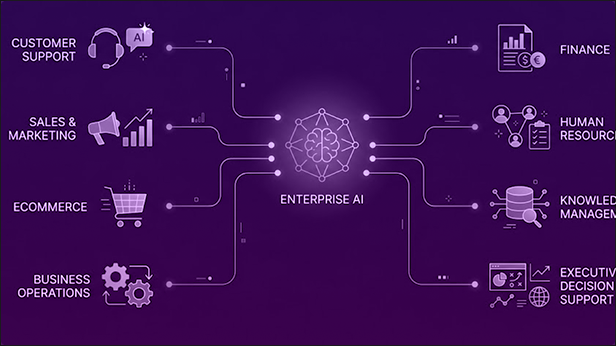
Technology & Integration
Organize and connect business knowledge through AI-powered systems. Help employees discover information and access organizational knowledge.
Infrastructure
Integration Capabilities
AI image recognition becomes more valuable when it is connected to your existing business applications, databases, digital platforms, and operational workflows.
Web Applications
Integrate image recognition into web platforms, dashboards, portals, business tools, and customer-facing applications.
Mobile Applications
Enable image capture, photo uploads, recognition, classification, and image-based workflows through mobile applications.
Ecommerce Platforms
Connect recognized products with product catalogs, categories, attributes, inventory, pricing, and commerce workflows.
APIs & Microservices
Expose image recognition functionality through APIs and modular services that can be consumed by multiple applications.
Enterprise Systems
Integrate recognition outputs with ERP, CRM, inventory, warehouse management, product management, and enterprise platforms.
Databases & Data Platforms
Store recognition results, classification labels, visual attributes, image references, and structured data for further processing and analytics.
Cloud & Edge Infrastructure
Deploy recognition pipelines across suitable cloud, on-premises, hybrid, or edge environments based on processing requirements.
Workflow Automation
Trigger business workflows, notifications, approvals, categorization, data updates, and operational actions using image recognition results.
Why Businesses Choose Piccosoft
AI image recognition requires the right combination of data preparation, model selection, recognition logic, application engineering, integration, and deployment.

Business-Specific Recognition
We develop image recognition solutions based on your objects, products, categories, business rules, and visual environments.

Custom AI Model Engineering
We can develop, customize, and fine-tune recognition models according to your requirements and available datasets.

Application-Ready AI
We build complete image recognition applications—not just AI models—including APIs, interfaces, data processing, business workflows, and integrations.

Integration with Existing Systems
Our solutions can connect with your existing applications, databases, ecommerce platforms, enterprise systems, and operational workflows.

Flexible Architecture
We design solutions around your processing requirements, image volumes, infrastructure, deployment environment, and scalability needs.

End-to-End Development
From requirements analysis and dataset preparation to AI implementation, application development, integration, and deployment.
Business Outcomes
AI image recognition can help organizations improve efficiency, automate image-related workflows, and unlock value from visual data.
Automate Image Identification
Reduce manual effort involved in recognizing and categorizing images.
Improve Classification Efficiency
Automatically categorize images based on business-defined requirements.
Enhance Product Discovery
Enable image-based search and visual product identification.
Improve Data Organization
Generate structured labels, tags, attributes, and categories.
Accelerate Business Workflows
Reduce delays in image-based processing and verification.
Scale Image Processing
Analyze growing image volumes with automated AI workflows.
Frequently Asked Questions
AI implementation includes strategy, solution design, development, integration, and deployment. The exact scope depends on business requirements and selected use cases.
AI image recognition uses machine learning and deep learning models to identify objects, products, patterns, categories, and other visual information within images.
Depending on the application, AI image recognition can process photographs, product images, industrial images, agricultural images, scanned images, digital assets, and other supported image formats.
CRM development is the process of designing and building software that helps businesses manage customer relationships, sales activities, marketing campaigns, and customer support.
Yes. We can develop, customize, or fine-tune image recognition models for specific objects, products, categories, visual environments, and business requirements.
Yes. We can develop applications that recognize products from uploaded images and connect the recognition results with product catalogs, categories, attributes, and relevant business data.
Yes. Depending on the model and use case, AI systems can recognize or classify multiple objects within the same image using suitable image recognition or object detection approaches.
Yes. Image recognition can be integrated into mobile apps to support photo capture, image uploads, product recognition, visual verification, and other image-driven workflows.
Recognition accuracy depends on the image quality, dataset diversity, object complexity, environmental conditions, model selection, training data, and evaluation criteria. We assess and validate the solution against the specific requirements of the use case.
Ready to Start Your AI Image Recognition Project?
Make image recognition part of your digital products, business applications, and operational workflows.
Whether you need product recognition, automated image classification, visual search, custom AI models, or an image-powered business application, Piccosoft can help you build a solution aligned with your requirements.