





 React Native Development
 Angularjs 2 Development
 Angularjs Development
 Nodejs Development

 AI Development
 Agentic AI Development
 AI-Product-Engineering
 Generative AI Development
 AI Chatbot Development
 RAG Development
 AI MCP Development
 n8n Automation Development
 AI Consulting
Piccosoft

Picco Labs
Picco AI
Piccosoft

LLM Integration Services
Integrate Large Language Models into Your Business Applications
Connect powerful Large Language Models with your business applications, internal data, and workflows to build intelligent, context-aware software solutions.
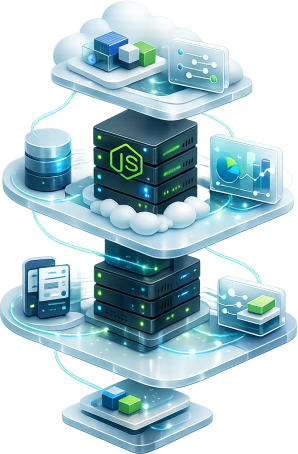
Implement AI Where It Creates Real Business Value
Why Businesses Struggle to Implement AI
From Business Requirements to AI Implementation
What We Deliver
Where Can Your Business Implement AI?
Technologies That Power Our AI Solutions
Connect AI with Your Existing Business Ecosystem
Why Businesses Choose Piccosoft
Build a More Intelligent and Efficient Business
Frequently Asked Questions
Overview
Large Language Models enable applications to understand natural language, process information, generate content, and support intelligent interactions. Piccosoft helps businesses integrate LLMs into existing software environments to build context-aware applications and AI-powered business experiences.
Identify AI Opportunities
Discover where AI can create meaningful improvements across your business. Prioritize use cases based on business value, feasibility, and expected impact.
Automate Business Processes
Reduce repetitive manual work through intelligent workflow automation. Help teams focus on higher-value activities and operational responsibilities.
Integrate AI with Existing Systems
Connect AI capabilities with applications, APIs, and databases. Enable intelligent workflows without replacing your entire technology environment.
Improve Knowledge Access
Make business information easier to search, understand, and use. Connect AI with documents, databases, and internal knowledge sources.
Build AI Applications
Develop custom AI applications, assistants, and intelligent business solutions. Design experiences around specific users, processes, and organizational requirements.
Create an AI Roadmap
Plan AI adoption through practical and achievable implementation stages. Start with focused use cases and expand capabilities as your business grows.
Challenges in Integrating LLMs into Business Applications
Businesses often face challenges related to AI strategy, data, integration, security, and technical expertise. Our implementation approach addresses these challenges through practical planning and engineering.

Selecting the Right LLM
Choosing suitable models based on accuracy, response quality, cost, performance, and business requirements can be challenging.
Read more

Limited Business Context
General-purpose LLMs may not have access to the internal information required to provide relevant business responses.
Read moreManaging Response Accuracy
LLM applications need appropriate context, prompt design, validation, and evaluation to improve response quality.
Read moreEnterprise Data Connectivity
Connecting LLMs with business databases, documents, APIs, and applications requires a structured integration approach.
Read moreOur LLM Integration Approach
We follow a structured approach to transform business requirements into working AI solutions. Each stage focuses on business value, technical feasibility, and continuous improvement.
Requirement Analysis
Understand your business use cases, application requirements, data sources, and expected LLM capabilities.
LLM Selection & Architecture
Evaluate suitable commercial and open-source LLMs based on performance, cost, privacy, and deployment requirements.
Integration & Development
Connect selected LLMs with your applications, APIs, business data, and required AI components.
Testing & Evaluation
Evaluate response quality, contextual relevance, accuracy, performance, and application behaviour.
Deployment & Optimization
Prepare the integration for production and optimize model usage, response handling, and operational efficiency.
What We Integrate
We deliver AI capabilities designed around business requirements and existing technology environments. Our services cover strategy, development, integration, automation, and deployment.
Commercial LLM Integration
Integrate models such as OpenAI, Anthropic Claude, and Google Gemini into business applications through supported interfaces.
Open-Source LLM Integration
Connect suitable open-source language models through supported inference services and deployment environments.
RAG-Based LLM Integration
Connect LLMs with business documents, databases, and knowledge repositories to provide context-aware responses.
Prompt Engineering & Optimization
Design and refine prompts to improve response relevance, consistency, and task-specific behaviour.
LLM Application Integration
Embed language model capabilities into existing software applications, platforms, and user interfaces.
LLM Performance & Usage Optimization
Improve model selection, request handling, response efficiency, and usage management based on application requirements.
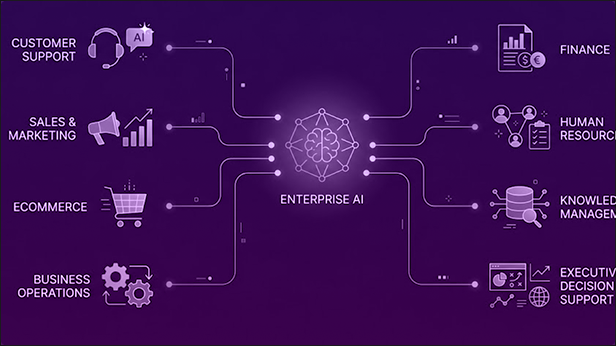
Where LLM Integration Creates Business Value
AI can be implemented across departments, processes, and business functions. We develop solutions based on your operational requirements and business priorities.
1. Enterprise Knowledge Assistants
Connect LLMs with internal knowledge sources to help employees retrieve and understand business information.
2. AI Customer Support Applications
Integrate LLMs to understand customer queries and generate context-aware support responses.
3. Document Intelligence
Use LLMs to summarize, extract, classify, and interpret information from business documents.
4. Business Content Generation
Generate reports, proposals, product descriptions, emails, and other business content using LLM-powered applications.
5. Business Data Analysis
Enable natural-language interaction with approved business information and reporting capabilities.
6. AI-Powered Software Applications
Add language understanding and generation capabilities to existing products and custom software platforms.
Technology & Integration
Organize and connect business knowledge through AI-powered systems. Help employees discover information and access organizational knowledge.
Infrastructure
Integration Capabilities
AI delivers greater value when it works with existing business systems and workflows. We integrate intelligent capabilities across applications, platforms, data sources, and communication tools.
AI Model Providers
Integrate commercial and open-source LLMs through supported APIs and inference environments.
Business Applications & APIs
Connect language models with existing applications, backend services, and business APIs.
Databases & Knowledge Sources
Integrate structured databases, documents, and knowledge repositories to provide relevant business context.
AI Agents & MCP Tools
Connect LLM-powered applications with compatible agents, tools, and MCP-based capabilities.
Cloud & Self-Hosted Infrastructure
Support suitable deployment options based on your data privacy, infrastructure, and operational requirements.
Why Piccosoft
Piccosoft combines business understanding, software engineering, and modern AI capabilities. We focus on practical solutions that integrate with existing technology environments.

AI Engineering Expertise
Combine LLM integration with Generative AI, RAG, AI agents, and application development capabilities.

Model Selection Guidance
Evaluate suitable language models based on your use cases, response requirements, cost, and infrastructure.

Business Context Integration
Connect language models with relevant business data to support more useful application responses.

Custom Application Integration
Integrate LLM capabilities into your existing software architecture and business workflows.

End-to-End Engineering Support
Get support across model evaluation, architecture, integration, testing, deployment, and improvements.
Make Your Applications More Intelligent with LLMs
Well-planned AI implementation can improve how teams work and businesses operate. We focus on productivity, efficiency, customer experience, and sustainable growth.
Natural-Language Experiences
Enable users to interact with business applications using natural-language questions and instructions.
Context-Aware Responses
Connect LLMs with approved business knowledge to generate more relevant responses.
Enhanced Application Capabilities
Introduce language understanding, summarization, and content generation into existing software.
Flexible LLM Adoption
Build an integration architecture that can accommodate different models and evolving business requirements.
Improved Information Access
Help employees and customers retrieve and understand business information more efficiently.
Scalable AI Adoption
Build an AI foundation for future use cases and expansion. Grow AI capabilities gradually based on business priorities.
Frequently Asked Questions
LLM integration services connect Large Language Models with business applications, APIs, databases, and workflows to introduce natural-language intelligence into software solutions.
We can integrate suitable models from providers such as OpenAI, Anthropic Claude, Google Gemini, and supported open-source LLM ecosystems.
LLM integration focuses on connecting language models with applications and systems. Generative AI development focuses on building complete applications using generative AI capabilities.
Yes. Techniques such as Retrieval-Augmented Generation (RAG) can connect LLM applications with approved internal documents, databases, and knowledge sources.
Yes. Suitable open-source LLMs can be integrated through supported inference services or self-hosted environments based on your infrastructure requirements.
Yes. LLM capabilities can be integrated into existing software through APIs, backend services, and suitable application architecture.
We use appropriate data retrieval, prompt engineering, contextual grounding, output validation, and evaluation processes to improve response relevance and quality.
Yes. LLM integrations can be designed for enterprise environments with appropriate authentication, access controls, data protection, monitoring, and infrastructure..
Timelines vary by scope, but a focused pilot can often launch within weeks, with broader rollout phased over several months. Starting with one high-value process allows the business to see measurable results early, before expanding to additional areas.