


 React Native Development
 Angularjs 2 Development
 Angularjs Development
 Nodejs Development

 AI Development
 Agentic AI Development
 AI-Product-Engineering
 Generative AI Development
 AI Chatbot Development
 RAG Development
 AI MCP Development
 n8n Automation Development
 AI Consulting
Piccosoft

Picco Labs
Picco AI
Piccosoft

AI Cloud Deployment & Infrastructure
Deploy AI Solutions with Scalable, Secure Cloud Infrastructure
Deploy AI applications, models, and intelligent services on reliable cloud infrastructure. Piccosoft helps businesses build production-ready AI environments designed for performance, scalability, security, and operational efficiency.
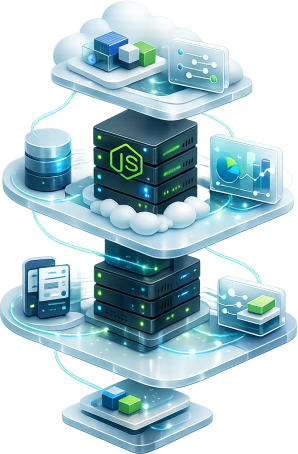
Production-Ready Infrastructure for AI Applications
Common Challenges in Deploying AI Solutions
From Infrastructure Planning to Production Deployment
Infrastructure Services for Production AI
Where AI Infrastructure Makes a Difference
Technologies That Power Our AI Solutions
Connect AI Infrastructure with Your Technology Environment
An Engineering Partner for Production AI Infrastructure
Make AI Solutions Ready for Real-World Operations
Frequently Asked Questions
Production-Ready Infrastructure for AI Applications
Building an AI solution is only one part of the journey. It also needs the right infrastructure to operate reliably, handle workloads, and scale as business requirements grow.
Piccosoft provides AI cloud deployment and infrastructure services to help businesses deploy AI applications, model services, and supporting components across cloud, hybrid, and self-hosted environments.
From infrastructure planning and containerisation to deployment, monitoring, and optimisation, we help move AI solutions from development into production.
Common Challenges in Deploying AI Solutions

Infrastructure Readiness
AI applications require infrastructure that can support their processing, storage, and operational requirements.

Compute and GPU Requirements
Selecting suitable compute resources for model workloads can affect performance and infrastructure costs.
Scalability and Performance
AI services need to handle changing workloads without compromising application responsiveness.
Security and Data Protection
AI infrastructure must support secure access, controlled data handling, and appropriate deployment practices.
Deployment Complexity
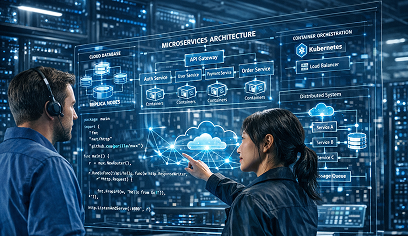
Managing models, APIs, databases, and supporting services across environments can increase operational complexity.
Infrastructure Cost Management
Unoptimised compute resources and workloads can increase cloud infrastructure expenditure.
From Infrastructure Planning to Production Deployment
Infrastructure Assessment
Understand AI workloads, application architecture, data requirements, performance expectations, and deployment constraints.
Cloud Architecture Design
Plan the infrastructure architecture, compute resources, storage, networking, security, and deployment environment.
Environment Setup
Configure cloud infrastructure, containers, databases, networking, and required supporting services.
AI Application Deployment
Deploy AI applications, model services, APIs, and supporting components into the selected environment.
Monitoring and Optimisation
Establish monitoring, logging, resource utilisation tracking, and performance optimisation practices.
Scaling and Operations
Prepare infrastructure for workload growth through resource management, automation, and operational improvements.
Infrastructure Services for Production AI
AI Application Cloud Deployment
Deploy AI-powered applications, assistants, RAG systems, and intelligent business solutions into cloud environments.
AI Model Serving Infrastructure
Set up infrastructure for hosting, accessing, and operating AI models and inference services.
Cloud and Hybrid Deployment
Deploy AI workloads across public cloud, private cloud, hybrid, and self-hosted environments based on business requirements.
Containerisation and Orchestration
Package AI applications and supporting services using containers and orchestration technologies.
GPU and Compute Infrastructure
Plan and configure suitable compute resources for AI workloads, including GPU-based infrastructure where required.
AI Infrastructure Monitoring
Implement infrastructure monitoring, application logs, service health checks, and operational visibility.
CI/CD and Deployment Automation
Establish automated build, testing, and deployment workflows for AI applications and supporting services.
Infrastructure Security and Access Management
Configure network controls, authentication, permissions, secrets management, and secure deployment practices.
Cloud Cost and Resource Optimisation
Improve resource utilisation and manage infrastructure costs through workload assessment and optimisation.
Where AI Infrastructure Makes a Difference
1. Enterprise AI Applications
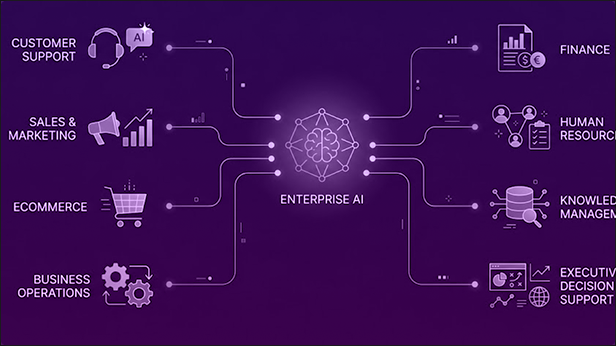
Deploy internal AI assistants, business intelligence applications, and enterprise knowledge systems.
2. RAG and Knowledge Platforms
Host retrieval pipelines, vector databases, document processing services, and LLM-powered applications.
3. AI Agent Workflows
Deploy AI agents, workflow automation services, and orchestration components in production environments.
4. Vision AI Applications
Support image and video processing workloads, computer vision services, and inference infrastructure.
5. High-Volume AI APIs
Deploy and scale AI-powered APIs that serve multiple applications, users, or business processes.
6. Self-Hosted AI Environments
Build controlled deployment environments for organisations with specific infrastructure, data, or operational requirements.
Technologies That Power Our AI Solutions
Infrastructure
Connect AI Infrastructure with Your Technology Environment
Cloud Services and Infrastructure
Connect AI deployments with cloud computing, storage, networking, and infrastructure services.
Application and Backend Systems
Integrate deployed AI services with backend applications, APIs, and business platforms.
Databases and Data Sources
Connect operational databases, vector databases, document stores, and enterprise data sources.
Model and AI Service Providers
Connect hosted AI models, external model APIs, and self-hosted inference services.
Monitoring and Operational Tools
Integrate logging, monitoring, alerting, and infrastructure management tools.
CI/CD and Development Environments
Connect deployment pipelines with source control, testing environments, and release workflows.
An Engineering Partner for Production AI Infrastructure

Application and AI Engineering Experience
We understand the relationship between AI applications, backend services, data systems, and deployment infrastructure.

End-to-End Deployment Support
From architecture planning to production deployment, we support the infrastructure lifecycle.

Flexible Deployment Models
We work with cloud, hybrid, and self-hosted environments based on project requirements.

Security-Conscious Engineering
We consider access management, data protection, network configuration, and operational controls.

Scalable Architecture
We design infrastructure with future workload growth and application requirements in mind.
Practical Cost Awareness
We consider resource utilisation and infrastructure costs while planning deployment environments.
Make AI Solutions Ready for Real-World Operations
Production Readiness
Move AI applications from development environments into production.
Scalable Infrastructure
Support changing workloads and growing application usage.
Reliable Operations
Improve service visibility through monitoring and operational practices.
Performance Management
Align compute resources with application and model requirements.
Infrastructure Control
Improve security, access management, and deployment consistency.
Cost Awareness
Make informed infrastructure decisions based on workload requirements.
Frequently Asked Questions
AI cloud deployment involves hosting AI applications, models, APIs, and supporting services on cloud infrastructure so they can operate in production environments.
Yes. We can plan and deploy AI applications on AWS based on the application's architecture, infrastructure requirements, and operational needs.
Yes. We support private cloud, hybrid, and self-hosted deployment approaches where they align with business and technical requirements.
Not always. GPU requirements depend on the model, inference workload, processing volume, and whether models are hosted externally or locally.
Yes. We can deploy RAG applications, AI agents, vector databases, APIs, and their supporting services.
We can implement monitoring, logging, deployment automation, and ongoing infrastructure support based on the agreed scope.
Yes. We can assess existing deployments and identify opportunities to improve resource utilisation, performance, scalability, and cost efficiency.