



 React Native Development
 Angularjs 2 Development
 Angularjs Development
 Nodejs Development

 AI Development
 Agentic AI Development
 AI-Product-Engineering
 Generative AI Development
 AI Chatbot Development
 RAG Development
 AI MCP Development
 n8n Automation Development
 AI Consulting
Piccosoft

Picco Labs
Picco AI
Piccosoft

MCP Server Development
Build Custom MCP Servers for AI Applications
Develop custom MCP servers that expose business tools, data, and resources to compatible AI applications, assistants, and agents.
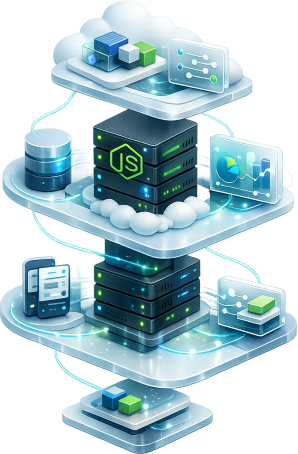
Implement AI Where It Creates Real Business Value
Why Businesses Struggle to Implement AI
From Business Requirements to AI Implementation
What We Deliver
Where Can Your Business Implement AI?
Technologies That Power Our AI Solutions
Connect AI with Your Existing Business Ecosystem
Why Businesses Choose Piccosoft
Build a More Intelligent and Efficient Business
Frequently Asked Questions
Custom MCP Server Development for Connected AI
MCP servers provide a standardized interface for compatible AI applications to discover and access tools and resources. Piccosoft builds custom MCP servers around your business logic, existing systems, and application requirements.
Intelligent Task Execution
Agents understand objectives and execute tasks through connected tools.
They can move beyond answering questions to taking action.
Context-Aware Intelligence
Agents use relevant business context before responding or acting.This helps deliver more accurate and useful outcomes.
Tool & API Usage
Agents can interact with APIs, databases, applications, and enterprise tools.They can retrieve information and trigger actions across systems.
Business Process Automation
Agents can support repetitive and multi-step business processes.They help reduce manual work while keeping humans in control.
Human-Agent Collaboration
Agents can work alongside employees rather than replacing existing workflows.Human approval can remain part of critical decisions and actions.
Scalable Server Architecture
We design servers that grow with your needs. New tools, resources, and integrations can be added over time.
Challenges in Building MCP Servers
AI applications cannot use business tools and data without a structured, secure interface. MCP servers provide a controlled way to expose selected capabilities to compatible AI applications.
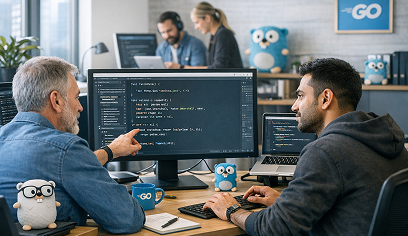
Making Business Tools Accessible to AI
Existing business functions may not be directly accessible to AI applications without suitable MCP interfaces.
Read more
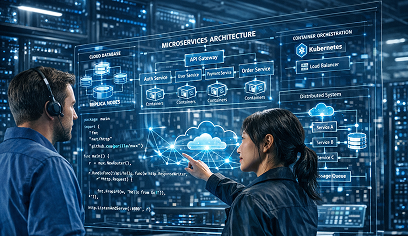
Connecting Multiple Data Sources
Exposing information from different APIs, databases, and services requires a well-planned server architecture.
Read moreManaging Tool Execution
Business operations need clear input validation, error handling, and defined execution boundaries.
Read moreProtecting Business Resources
MCP servers must be designed with appropriate authentication, authorization, and access controls.
Read moreRepeated Custom Integrations
Connecting each AI application to your systems separately adds cost and complexity. An MCP server can be built once and reused across compatible AI applications.
Read moreScaling Server Capabilities
As AI use cases grow, new tools and data sources must be added without disrupting existing ones. A modular server design makes this manageable.
Read moreFrom Server Architecture to Implementation
We start with your business tools and use cases rather than the protocol. Our approach turns those requirements into a practical, secure MCP server.
Requirements Analysis
Identify the business tools, resources, APIs, and data sources your MCP server needs to expose.
Server Architecture Design
Define the server structure, supported MCP capabilities, interfaces, and integration patterns.
Custom Server Development
Implement MCP tools and resources around your business logic and technical requirements.
Testing & Validation
Test protocol compatibility, tool execution, input validation, error handling, and access permissions.
Deployment Preparation
Prepare the server for an appropriate hosting environment, monitoring, and ongoing maintenance.
Deploy & Maintain
Deploy the server to your chosen environment and monitor tool usage. Refine and extend tools as your systems and AI use cases evolve.
What We Build
We build MCP servers around the tools, resources, and business logic your AI applications need. Each capability is designed for controlled, reliable use.
Custom MCP Server Development
Build MCP servers tailored to your business applications, AI use cases, and operational requirements.
MCP Tool Implementation
Expose selected business functions through discoverable tools that compatible AI applications can invoke.
MCP Resource Implementation
Provide structured access to approved documents, records, and contextual information through MCP resources.
API-Connected MCP Servers
Connect existing APIs and backend services to server capabilities through suitable integration logic.
Database-Connected MCP Servers
Develop server functionality that retrieves or manages approved business data through controlled data-access layers.
Custom Business Logic
Implement validation, processing, and application-specific rules behind MCP tools and operations.
Human-in-the-Loop
Sensitive tool actions can require employee approval before execution. This keeps high-impact operations under human control.
Monitoring & Logging
Track tool calls, outcomes, errors, and usage across your server. These insights support audits and improve reliability over time.
Where Custom MCP Servers Can Be Used
Custom MCP servers can support employees, customers, operations, and business processes. We build around specific tools and systems rather than forcing a generic approach.
1. AI Business Assistants
Provide compatible assistants with access to approved business information and operational tools.
2. Ecommerce MCP Servers
Expose selected product, inventory, order, and store-management capabilities to AI applications.
3. Enterprise System Access
Make selected enterprise application functions available through defined MCP tools.
4. Knowledge Retrieval
Provide access to approved documents, internal resources, and contextual business information.
5. Reporting & Analytics
Expose selected reporting functions and business data queries to compatible AI applications.
6. Developer Tools
Make approved development utilities, documentation, and engineering resources accessible through MCP.
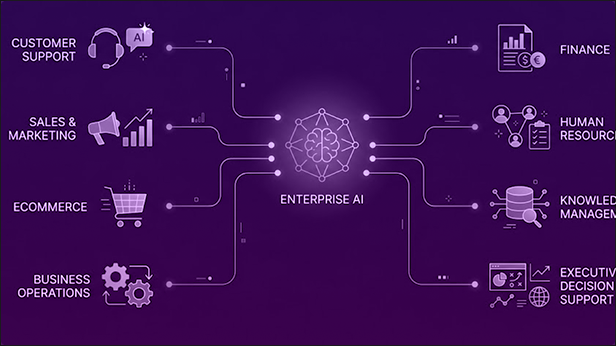
Technologies That Power Our AI Solutions
The AI technologies and frameworks we use to build intelligent, scalable solutions
Infrastructure
Connect Your MCP Server with Existing Systems
An MCP server is most valuable when it works with the systems your business already uses. We connect it with applications, data sources, APIs, and enterprise workflows.
MCP Clients
Enable compatible MCP clients to discover and use the tools and resources exposed by your server.
Business APIs
Connect existing backend services and APIs to defined MCP tools.
Databases & Data Sources
Retrieve or process approved business information through suitable data-access interfaces.
AI Agents & Assistants
Make server capabilities available to compatible AI agents and assistants through supported MCP connections.
Cloud & Self-Hosted Infrastructure
Prepare server implementations for suitable cloud or self-hosted environments based on your requirements.
Payment & Checkout Services
Connect approved payment and checkout-related functions where platform APIs allow. Sensitive payment data stays within 7
Authentication & Permissions
Integrate identity, access control, and permission requirements so tool calls respect existing roles and aries.
Workflow & Automation Platforms
Link server capabilities with existing workflow engines and automation tools.
Security & Compliance Systems
Align the server with your encryption, data governance, and regulatory requirements. Tool activity remains auditable.
Monitoring & Observability Tools
Send tool-call logs and performance metrics to the monitoring platforms you already use.
Your Engineering Partner for MCP Server Development
We combine software engineering, AI engineering, integration expertise, and business understanding. Our focus is building MCP servers that work within your business.

Custom Application Engineering
Build MCP servers around your business logic, APIs, and existing technology stack.

AI Integration Expertise
Combine server development with AI agents, assistants, RAG, and application integration.

Business-Focused Design
Define server tools and resources around practical use cases and operational needs.

Security-Conscious Implementation
Incorporate appropriate access controls, input validation, and safeguards for exposed operations.

End-to-End Development Support
Get support across architecture, development, testing, deployment preparation, and improvements.

Long-Term Technology Partner
We support your MCP server from the first requirement discussion through production deployment and future expansion.
Turn Business Capabilities into AI-Accessible Tools
The goal of an MCP server is not only to expose tools. It is to give AI applications dependable, controlled access to the capabilities your business relies on.
Structured AI Access
Make selected business tools and resources accessible through standardized MCP interfaces.
Reusable Server Capabilities
Design server tools that can be used by compatible applications wherever the architecture permits.
Better System Connectivity
Connect AI applications with existing business services without replacing the underlying systems.
Controlled Tool Execution
Define the operations available to AI applications and apply suitable validation and permission controls.
Foundation for AI Expansion
Extend server capabilities as new business tools, resources, and AI use cases emerge.
Scalable AI Adoption
Start with a focused set of tools and expand into additional systems and workflows over time.
Frequently Asked Questions
An MCP server exposes tools, resources, and other supported capabilities through the Model Context Protocol so compatible AI applications can interact with them.
MCP server development involves designing and building server-side components that make selected business functions and information available to compatible MCP clients.
A custom MCP server can expose approved business operations, retrieve relevant information, connect to APIs, and provide resources based on its implementation and permissions.
Yes. An MCP server can connect to suitable APIs and databases through appropriate integration and data-access layers, subject to system capabilities and access controls.
Yes. We can develop ecommerce-focused MCP servers that expose selected product, inventory, order, and other store capabilities to compatible AI applications.
Compatible MCP clients connect using a supported transport and the server's configuration. The implementation depends on the client, deployment environment, and required capabilities.
Yes. MCP servers can be deployed in suitable self-hosted or cloud environments, depending on the implementation, infrastructure, and operational requirements.
Security measures can include authentication, authorization, permission boundaries, input validation, controlled tool execution, and monitoring appropriate to the deployment.
Yes. Support can include monitoring, maintenance, and updates to your MCP server as your systems or APIs change. We can also help extend it with new tools, resources, and AI application connections as your requirements grow.