



 React Native Development
 Angularjs 2 Development
 Angularjs Development
 Nodejs Development

 AI Development
 Agentic AI Development
 AI-Product-Engineering
 Generative AI Development
 AI Chatbot Development
 RAG Development
 AI MCP Development
 n8n Automation Development
 AI Consulting
Piccosoft

Picco Labs
Picco AI
Piccosoft

MCP API Integration
Connect Your APIs with AI Applications Through MCP
Make your existing APIs and backend services accessible to compatible AI applications through custom MCP tools and interfaces designed around your business requirements.
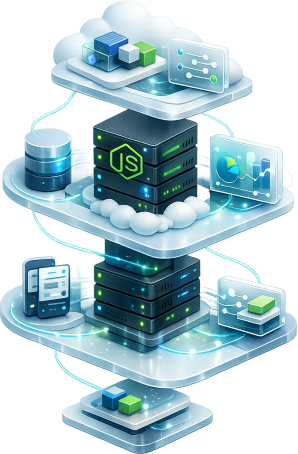
Implement AI Where It Creates Real Business Value
Why Businesses Struggle to Implement AI
From Business Requirements to AI Implementation
What We Deliver
Where Can Your Business Implement AI?
Technologies That Power Our AI Solutions
Connect AI with Your Existing Business Ecosystem
Why Businesses Choose Piccosoft
Build a More Intelligent and Efficient Business
Frequently Asked Questions
Turn Existing APIs into AI-Accessible Capabilities
MCP API integration connects existing application interfaces with AI tools through the Model Context Protocol. Piccosoft helps businesses expose selected API operations through MCP-compatible interfaces so AI applications can access approved data and functions.
Intelligent Task Execution
Agents understand objectives and execute tasks through connected tools.
They can move beyond answering questions to taking action.
Context-Aware Intelligence
Agents use relevant business context before responding or acting.This helps deliver more accurate and useful outcomes.
Tool & API Usage
Agents can interact with APIs, databases, applications, and enterprise tools.They can retrieve information and trigger actions across systems.
Business Process Automation
Agents can support repetitive and multi-step business processes.They help reduce manual work while keeping humans in control.
Human-Agent Collaboration
Agents can work alongside employees rather than replacing existing workflows.Human approval can remain part of critical decisions and actions.
Scalable MCP Architecture
We design MCP integrations that can grow with your requirements. New API-backed tools, workflows, and capabilities can be added over time.
Challenges in Connecting APIs with AI Applications
Existing APIs were built for applications and developers, not for AI. Exposing them through MCP requires clear tool definitions, controlled access, and reliable execution.

APIs Not Designed for AI Interaction
Existing APIs may need additional tool definitions and structured interfaces before compatible AI applications can use them effectively.
Read more

Complex API Structures
Multiple endpoints, request parameters, and response formats can make business operations harder to expose consistently.
Read moreData Access & Permissions
APIs need appropriate authentication, authorization, and restrictions when accessed through AI-driven workflows.
Read moreReliable Tool Execution
API operations require validation, error handling, and clear execution boundaries to support dependable AI interactions.
Read moreRepeated Custom Integration Effort
Each AI application may need its own connection to the same APIs. MCP provides a structured, reusable way to expose them once.
Read moreDisconnected AI Experiences
Standalone AI tools often cannot reach your business systems. MCP tools bring approved API capabilities into compatible AI applications.
Read moreFrom Existing APIs to MCP-Compatible Tools
We start with the business process rather than the AI model.Our approach connects the agent's intelligence, knowledge, tools, and actions into a practical solution.
API Assessment
Review your API documentation, endpoints, authentication methods, data structures, and intended use cases.
Integration Design
Identify the API operations to expose and define suitable MCP tools, input schemas, and response structures.
MCP Tool Development
Build the integration layer that connects MCP tool calls with the required API operations.
Testing & Validation
Validate API connectivity, input handling, responses, error scenarios, and access permissions.
Deployment Preparation
Prepare the integration for the target environment and establish appropriate operational controls.
Deployment & Ongoing Support
Deploy the MCP integration to the target environment and monitor tool usage. Refine tools as your APIs and AI use cases evolve.
What We Integrate
Our agents can combine reasoning, knowledge retrieval, tool usage, memory, and workflow execution.Each capability is designed around the specific responsibilities of the agent.
REST API Integration
Connect suitable REST APIs with MCP tools that expose selected business operations to compatible AI applications.
Custom API Connectors
Develop integration components for proprietary APIs and application-specific backend services.
API-to-MCP Tool Mapping
Map API endpoints and operations to clearly defined MCP tools with structured inputs and outputs
Authentication Integration
Implement appropriate authentication and authorization mechanisms based on API and application requirements.
Response Transformation
Structure API responses into useful formats for AI applications while respecting data and access requirements.
Error Handling & Validation
Implement validation and error-handling logic to improve the reliability of API-backed MCP tools.
Human-in-the-Loop Controls
Sensitive or write operations can require review or approval before execution. This keeps high-impact API actions under human control.
Monitoring & Logging
Track tool calls, responses, errors, and usage across your MCP integrations. These insights help you review reliability and improve tools over time.
Make Business APIs Available to AI
AI agents can support employees, customers, operations, and business processes across different functions.We build agents around specific tasks rather than forcing generic AI into existing workflows.
1. Ecommerce APIs
Expose approved product, inventory, order, and customer-service operations through MCP tools.
2. CRM & Sales APIs
Enable compatible AI applications to access approved customer records, lead information and sales operation.
3. ERP & Business APIs
Connect selected enterprise functions and business data to AI applications through suitable interfaces.4. Reporting APIs
Make approved reporting and analytics operations available for AI-assisted business queries.
5. Support & Service APIs
Connect support systems with AI applications for approved ticket lookups and service operations.
6. Custom Application APIs
Enable AI applications to interact with business functions exposed by your own software products.
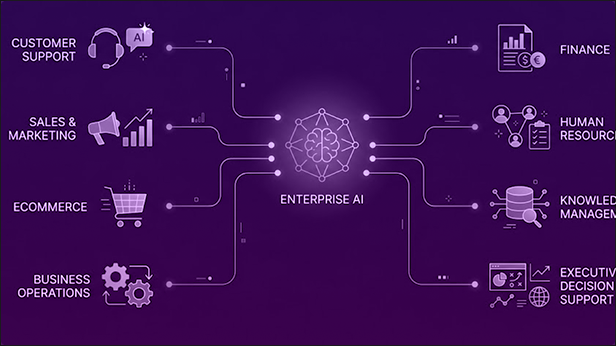
Technologies That Power Our AI Solutions
The AI technologies and frameworks we use to build intelligent, scalable solutions
Infrastructure
Connect APIs Across Your Technology Ecosystem
An AI agent becomes more valuable when it can work with the systems your business already uses.We connect agents with applications, data sources, APIs, and enterprise workflows.
REST APIs & Backend Services
Connect suitable API endtions to MCP tools through a structured integration layer.
Business Applications
Integrate APIs exposed by existing business applications based on their capabilities and access requirements.
Databases & Data Sources
Connect API-backed data operations with approved business information and data-access services.
AI Clients & Agents
Make integrated API tools available to compatible s, and agents.
Cloud & Self-Hosted Systems
Deploy API integration components in suitable environments based on infrastructure and security requirements.
Authentication & Identity Systems
Integrate OAuth, API keys, SSO, and role-based access requirements. Tool calls respect the permissions already defined for your users and systems.
API Gateways & Management Platforms
Work with your existing gateways to apply routing, rate limits, and policies. MCP tool traffic follows the same controls as your other API consumers.
Workflow & Automation Platforms
Connect MCP tools with existing workflow engines and automation tools. AI can support defined steps without changing established processes.
Security & Compliance Systems
Align integrations with your organization’s encryption, data governance, and regulatory requirements. Tool activity remains auditable.
Monitoring & Observability Tools
Send tool-call logs and performance metrics to the monitoring platforms you already use. Teams keep one view of how MCP tools behave in production.
Your Partner for MCP API Integration
We combine software engineering, AI engineering, integration expertise, and business understanding.Our focus is not simply building an AI chatbot—it is building an agent that can work within your business.

API & Backend Engineering
Experienced in designing, building, and integrating APIs and backend services across business applications.

Reuse Existing Investments
Build on your current APIs and backend services instead of rebuilding them for AI.

Custom Connector Development
Build solutions that fit your application requirements instead of relying on a one-size-fits-all implementation.

Connected Business Workflows
AI applications can support employees through approved API-backed tools inside existing workflows.

End-to-End Engineering Support
Get support across API assessment, integration design, development, testing, and deployment preparation.

Long-Term Technology Partner
We support MCP integrations from the first API assessment through production deployment. As your AI use cases grow, we can help you add new tools and expand coverage.
Make Existing APIs More Useful for AI
The goal of an AI agent is not simply to generate better answers.It is to help people complete work, make informed decisions, and improve business processes.
AI-Accessible Business Functions
Enable compatible AI applications to access selected API operations through MCP tools.
Reuse Existing Investments
Employees
Structured Tool Access
Reduce repeated integration effort by creating reusable MCP to
Connected Business Workflows
AI agents can support employees thro
Flexible Integration Expansion
Add new API-backed tools as your AI use cases and business requirements evolve
Scalable AI Adoption
Start with a focused agent and expand into additional processes over time.
Frequently Asked Questions
MCP API integration connects existing APIs with compatible AI applications by exposing selected API operations through MCP-compatible tools and interfaces.
An integration layer can map suitable REST API endpoints to MCP tools, define their inputs and outputs, and handle API requests and responses.
Not necessarily. Existing APIs can often be reused, with an MCP integration layer added where the architecture and requirements support it.
Yes. Private APIs can be considered when network connectivity, authentication, permissions, and the target deployment environment are appropriately configured.
Yes. Depending on the implementation and permissions, tools can support approved actions as well as data retrieval. Write operations should include appropriate validation and safeguards.
Protection can include authentication, authorization, least-privilege access, input validation, rate limits where appropriate, and monitoring of tool execution.
Yes. Suitable APIs from ecommerce, CRM, ERP, and other business platforms can be integrated based on their documentation, access permissions, and technical capabilities.
We begin by reviewing your API documentation, intended AI use cases, authentication requirements, and target systems to define the integration scope.
Yes. Support can include monitoring, maintenance, and updates to MCP tools as your APIs change. We can also help expand to additional API operations or AI applications as your requirements grow.