



 React Native Development
 Angularjs 2 Development
 Angularjs Development
 Nodejs Development

 AI Development
 Agentic AI Development
 AI-Product-Engineering
 Generative AI Development
 AI Chatbot Development
 RAG Development
 AI MCP Development
 n8n Automation Development
 AI Consulting
Piccosoft

Picco Labs
Picco AI
Piccosoft

Multi-Agent System Development
Build AI systems where specialized agents work together.
We design multi-agent systems where multiple AI agents collaborate, each handling a specific role, task, or business capability.From research and analysis to planning and execution, coordinated agents can handle complex workflows as a connected system.
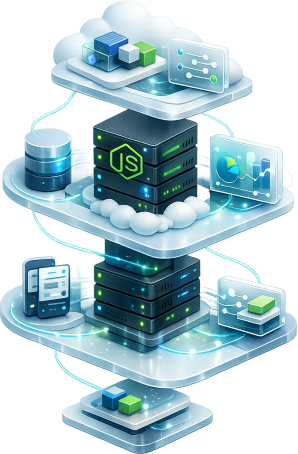
Implement AI Where It Creates Real Business Value
Why Businesses Struggle to Implement AI
From Business Requirements to AI Implementation
What We Deliver
Where Can Your Business Implement AI?
Technologies That Power Our AI Solutions
Connect AI with Your Existing Business Ecosystem
Why Businesses Choose Piccosoft
Build a More Intelligent and Efficient Business
Frequently Asked Questions
Multiple AI Agents. One Coordinated Intelligence Layer.
Complex business workflows often require different capabilities rather than one general-purpose agent.We design multi-agent architectures where specialized agents collaborate toward a shared business objective.
Specialized AI Agents
Create individual agents for research, analysis, planning, execution, or validation.
Each agent focuses on a clearly defined responsibility.
Agent Collaboration
Enable specialized agents to exchange information and coordinate tasks.
Agents can contribute their capabilities to a shared workflow.
Intelligent Orchestration
Design an orchestration layer that determines which agent should handle each task.
This helps coordinate complex multi-step processes.
Shared Context & Knowledge
Provide agents with relevant context and approved knowledge sources.
This enables coordinated work across multiple stages.
Task Delegation
Break complex objectives into smaller responsibilities for specialized agents.
Each agent can handle the part of the workflow it is designed for.
Coordinated Execution
Bring planning, decision-making, execution, and validation together.
The system can coordinate multiple capabilities toward a defined outcome.
Why Businesses Need Multi-Agent Systems
Some business problems are too complex for a single AI capability to handle effectively.Multi-agent systems can divide complex workflows into specialized responsibilities while coordinating them through a common architecture.
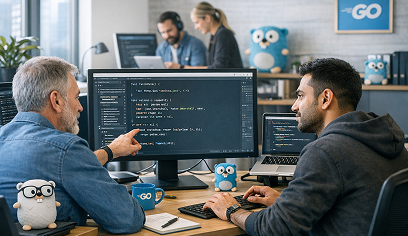
Complex Business Workflows
Some processes involve research, analysis, decision-making, and execution.A single agent may not be ideal for handling every responsibility.
Read more
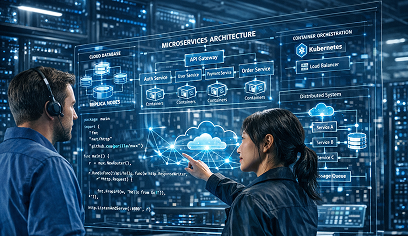
Too Many Responsibilities in One Agent
General-purpose agents can become difficult to manage as their responsibilities grow.Specialized agents can provide clearer boundaries.
Read moreSequential Manual Handoffs
Teams often pass information from one specialist or system to another.Multi-agent workflows can coordinate these stages digitally.
Read moreDisconnected AI Capabilities
Different AI functions may operate independently without sharing context.A multi-agent architecture can coordinate these capabilities.
Read moreDifficult Workflow Orchestration
Complex processes require the right task to reach the right capability at the right time.An orchestration layer can manage these interactions.
Read moreScaling AI Workflows
Adding more capabilities to a single AI workflow can increase complexity.Specialized agents can provide a more modular path for expansion.
Read moreDesigning AI Collaboration Around Your Business Process
We first understand the overall objective and then identify which responsibilities should belong to individual agents.The system is designed so agents collaborate through clearly defined roles, tools, context, and workflows.
Understand the Business Objective
We identify the overall process, expected outcome, users, systems, and decision points.
Decompose the Workflow
We break the process into logical tasks and responsibilities.
Define Agent Roles
Each agent is given a clear responsibility, capability, and boundary.
Design Agent Orchestration
We define how agents communicate, delegate tasks, share context, and coordinate execution.
Connect Knowledge & Tools
Each agent receives the knowledge sources and tools required for its role.
Test & Optimize Collaboration
We evaluate individual agent performance as well as the overall workflow.
Capabilities for Collaborative AI Systems
We combine specialized agents with orchestration, shared context, tools, knowledge, and workflow controls.This creates a structured architecture for complex AI-driven processes.
Specialized Agent Design
Create agents focused on specific business functions or tasks.
Each agent can have its own instructions, tools, and responsibilities.
Agent Orchestration
Coordinate multiple agents through a central or distributed orchestration approach.Tasks can be routed to the appropriate agent.
Agent-to-Agent Communication
Enable agents to exchange relevant information during a workflow.This supports collaboration across different stages.
Task Delegation
Allow agents to assign or delegate tasks to other specialized agents.Complex objectives can be divided into manageable responsibilities.
Shared Context Management
Maintain relevant information across agent interactions and workflow stages.This helps agents operate with the context they need.
Multi-Agent Tool Usage
Provide different agents with the tools required for their individual responsibilities.
Tool access can be controlled according to each role.
Human-in-the-Loop Controls
Introduce human review or approval at selected stages of the workflow.Critical decisions can remain under human control.
Multi-Agent Monitoring
Track agent interactions, workflow progress, actions, and outcomes.Monitoring helps identify bottlenecks and improve system performance.
Where Multi-Agent Systems Can Create Value
Multi-agent architectures are particularly useful when a workflow requires several specialized capabilities working together.We design the agent collaboration model around the complexity of the business process.
1. Research & Analysis System
A research agent can gather information while analysis agents interpret and structure findings.
2. Customer Service System
Specialized agents can handle intent identification, knowledge retrieval, account information, and resolution workflows.
3. Sales Intelligence System
Research, prospect analysis, qualification, and communication agents can work together.
4. E-commerce Operations System
Product, inventory, order, customer, and support agents can coordinate commerce workflows.
5. Enterprise Knowledge System
Different agents can specialize in retrieving, analysing, summarizing, and validating organizational knowledge.
6. Software Development System
Agents can specialize in requirements analysis, coding assistance, testing, documentation, and review.
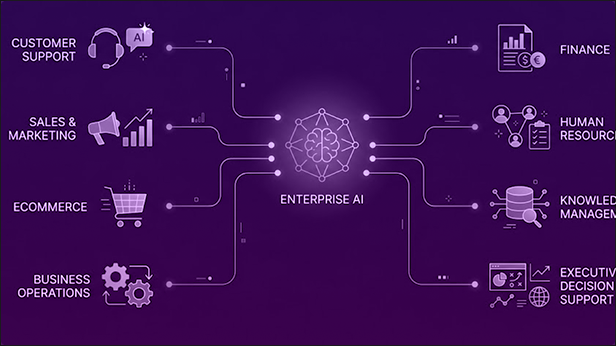
Technologies That Power Our AI Solutions
The AI technologies and frameworks we use to build intelligent, scalable solutions
Infrastructure
Connect Multiple Agents With Your Business Ecosystem
Multi-agent systems become powerful when specialized agents can interact with the tools and systems used by your organization.We connect the agent architecture with business applications, data, APIs, knowledge, and workflows.
Business Application Integration
Connect specialized agents with CRM, ERP, commerce, HR, finance, and operational systems.
API & Tool Integration
Provide agents with controlled access to internal and external APIs.
Knowledge & RAG Integration
Connect agents with relevant enterprise documents and knowledge sources.
Database Integration
Enable agents to retrieve information from approved business databases.
Workflow Integration
Connect multi-agent workflows with existing business process and automation systems.
Agent Communication Layer
Implement mechanisms for agents to exchange tasks, context, and results.
Identity & Access Control
Apply appropriate access controls to agents and their connected capabilities.
Cloud & Infrastructure Integration
Deploy multi-agent systems within suitable cloud or enterprise infrastructure.
Monitoring & Observability
Connect the multi-agent system to logging, tracing, and performance-monitoring platforms.
Security & Compliance
Integrate the system with organizational security controls, access boundaries, and relevant regulatory requirements.
Engineering AI Systems That Work Together
Multi-agent systems require more than creating multiple bots—they require architecture, orchestration, integration, and clear responsibilities.We bring these capabilities together to design collaborative AI systems around real business workflows.

Architecture-First Approach
We design the overall agent architecture before adding individual capabilities.

AI Agent Expertise
We understand agent reasoning, tool usage, knowledge retrieval, and workflow execution.

Strong Integration Capability
We connect agents with APIs, databases, business applications, and enterprise tools.

Modular Design
Each agent can have a focused responsibility rather than carrying unnecessary complexity.

Controlled Collaboration
Agent communication, tools, permissions, and actions can be clearly defined.

Scalable AI Architecture
We design systems that can evolve from a few specialized agents to broader agentic workflows.
Coordinate Multiple AI Capabilities Into One System
Multi-agent systems can bring specialized AI capabilities together to handle complex workflows.The result is a more modular and scalable approach to solving sophisticated business problems.
Better Handling of Complex Workflows
Complex objectives can be divided across specialized agents.
Improved Workflow Coordination
Agents can exchange information and coordinate multiple stages of a process.
Modular AI Architecture
New capabilities can be added through additional specialized agents.
Greater AI Capability Coverage
Different agents can provide different forms of intelligence within one workflow.
Reduced Process Complexity
Specialized responsibilities can be separated instead of concentrating everything in one AI component.
Scalable Agentic Foundation
Organizations can start with a focused multi-agent workflow and expand gradually.
Frequently Asked Questions
A multi-agent system consists of multiple AI agents with different responsibilities working toward a shared objective.Agents can collaborate, delegate tasks, exchange information, and coordinate workflows.
Multiple agents can divide complex responsibilities into specialized roles.This can make sophisticated workflows more modular and easier to manage.
Yes, each agent can be given the tools and systems required for its specific responsibility.This also helps limit unnecessary access.
Agents can exchange structured tasks, context, information, and results through an orchestration or communication layer.The architecture depends on the workflow and collaboration requirements.
Yes, agents can connect to approved enterprise documents, databases, and business information.Access can be controlled based on each agent's role and requirements.
Yes, human approval can be introduced at selected stages.This is useful when a workflow includes important decisions or sensitive actions.
Yes, agents can connect with APIs, databases, enterprise applications, and workflow systems.Each agent can receive access to the capabilities required for its role.
Yes, a focused workflow can be implemented with a small number of specialized agents.Additional agents and capabilities can be introduced as the system evolves.
Multi-agent systems can be designed with defined roles, coordination protocols, and arbitration rules that govern how agents share tasks and resources.
Orchestration logic and monitoring help detect and resolve conflicts, deadlocks, or redundant work before they affect outcomes.